LitLens
In DevelopmentDeep literary analysis for every major novel - built for IGCSE, IB, CBSE, ICSE, and ISC students.
The Problem
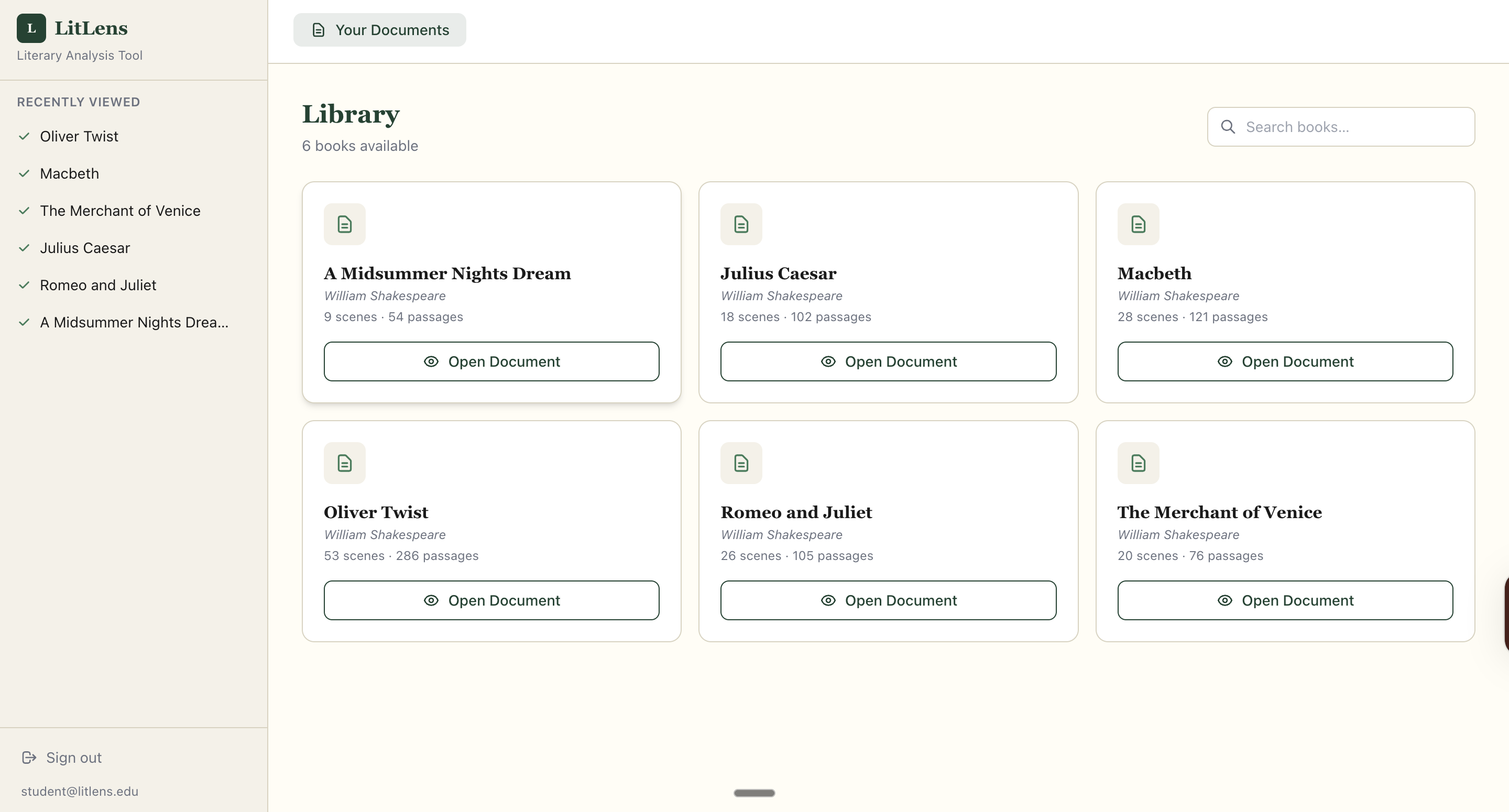
My dad runs a school called Agastya International and he came to me with something his students were struggling with - so many novels to get through, so much analysis required for each one, and no single resource that actually covered everything properly. I did IB myself so I know exactly how hard it is to sit with a Shakespeare play and have to produce real critical analysis. Most resources are too shallow or too scattered across ten different websites. We wanted to fix that.
After we built the first version we realised this wasn't just useful for his school - it could work for students across India and honestly across the world. So we decided to turn it into a proper product.
How It Was Built
Built with Claude Code, Supabase, and Railway. Fully AI-assisted development. The data architecture is heavy - each book needs a lot of structured content across a lot of layers - so a big part of building this was figuring out how to manage that without costs getting out of hand.
The Hard Part
Running AI at this kind of scale is expensive, and figuring out how to cut API costs without killing the quality of the product was honestly one of the most frustrating parts of the whole build. It's its own kind of problem that nobody really tells you about when you start building with AI.
What Was Built
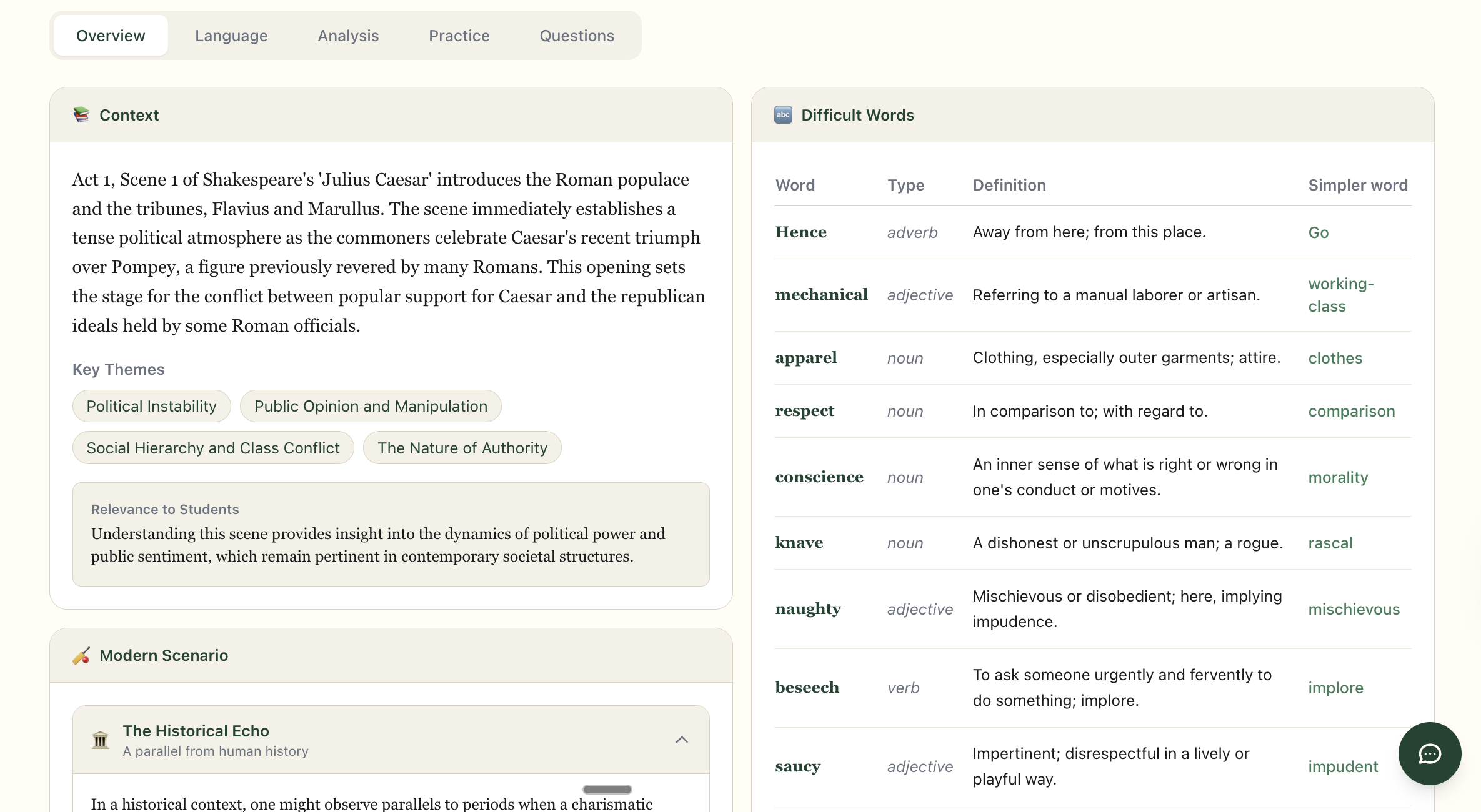
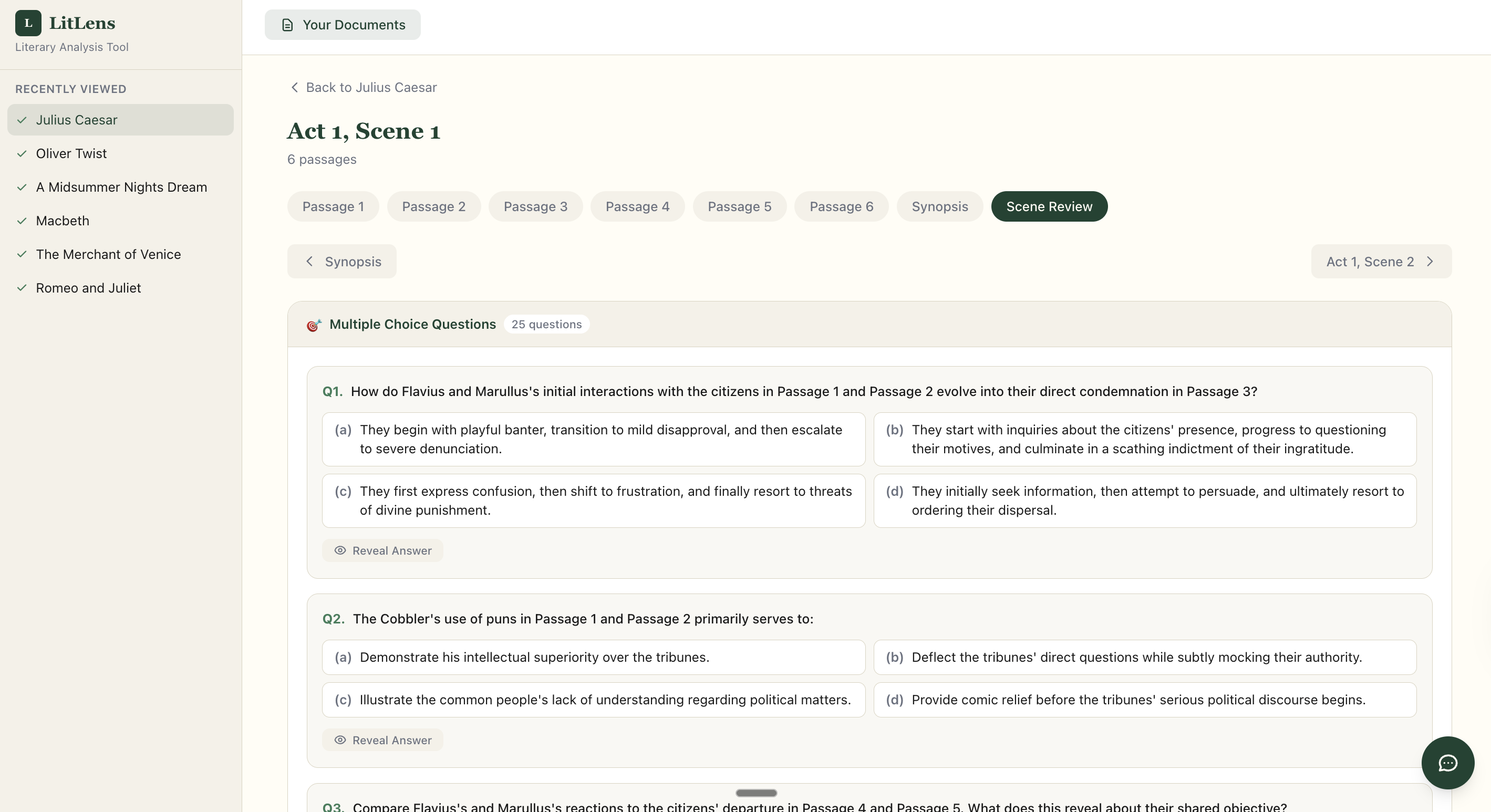
LitLens gives students deep, structured analysis for each book across four main tabs - Overview, Language, Practice, and Questions.
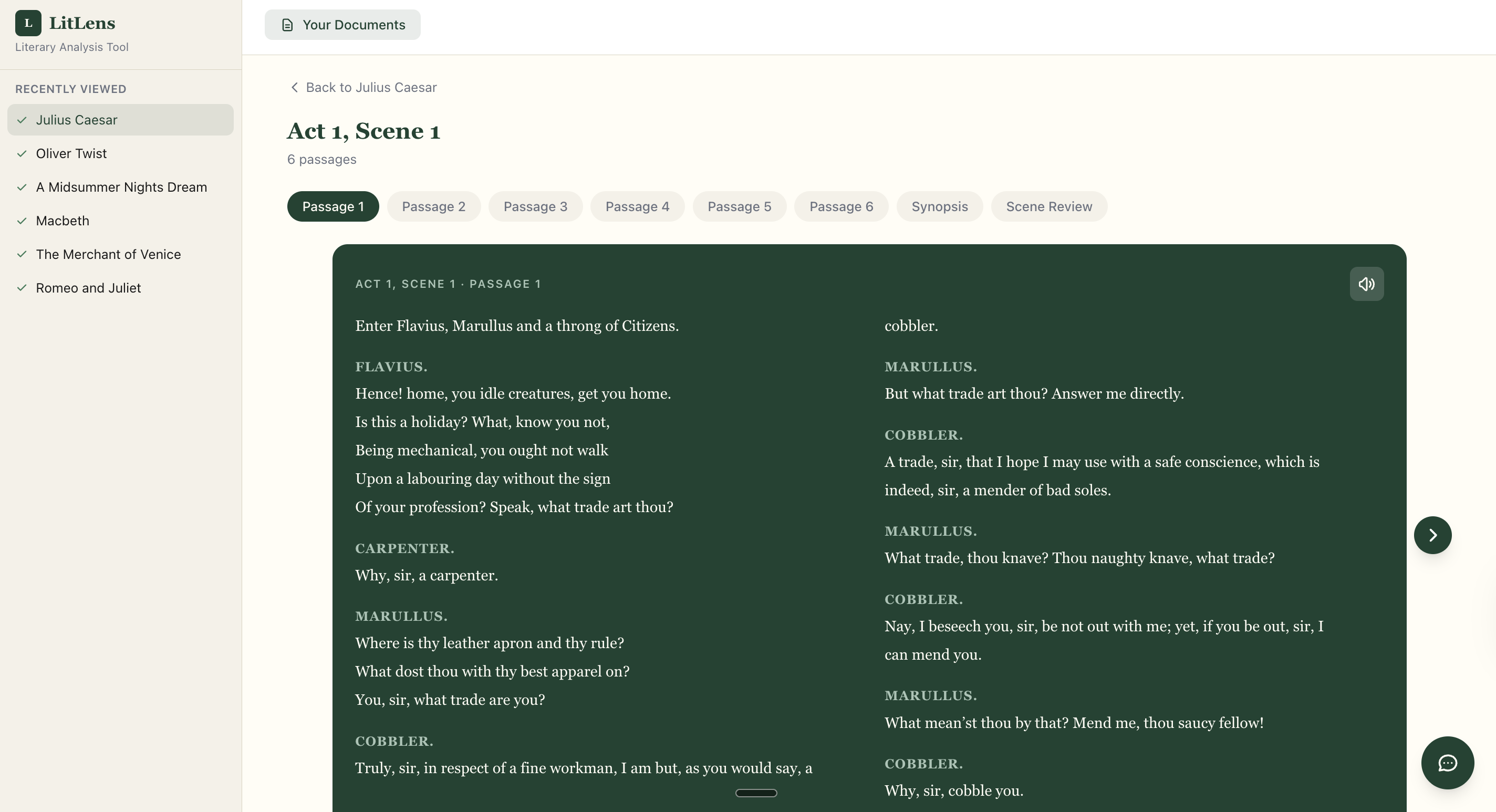
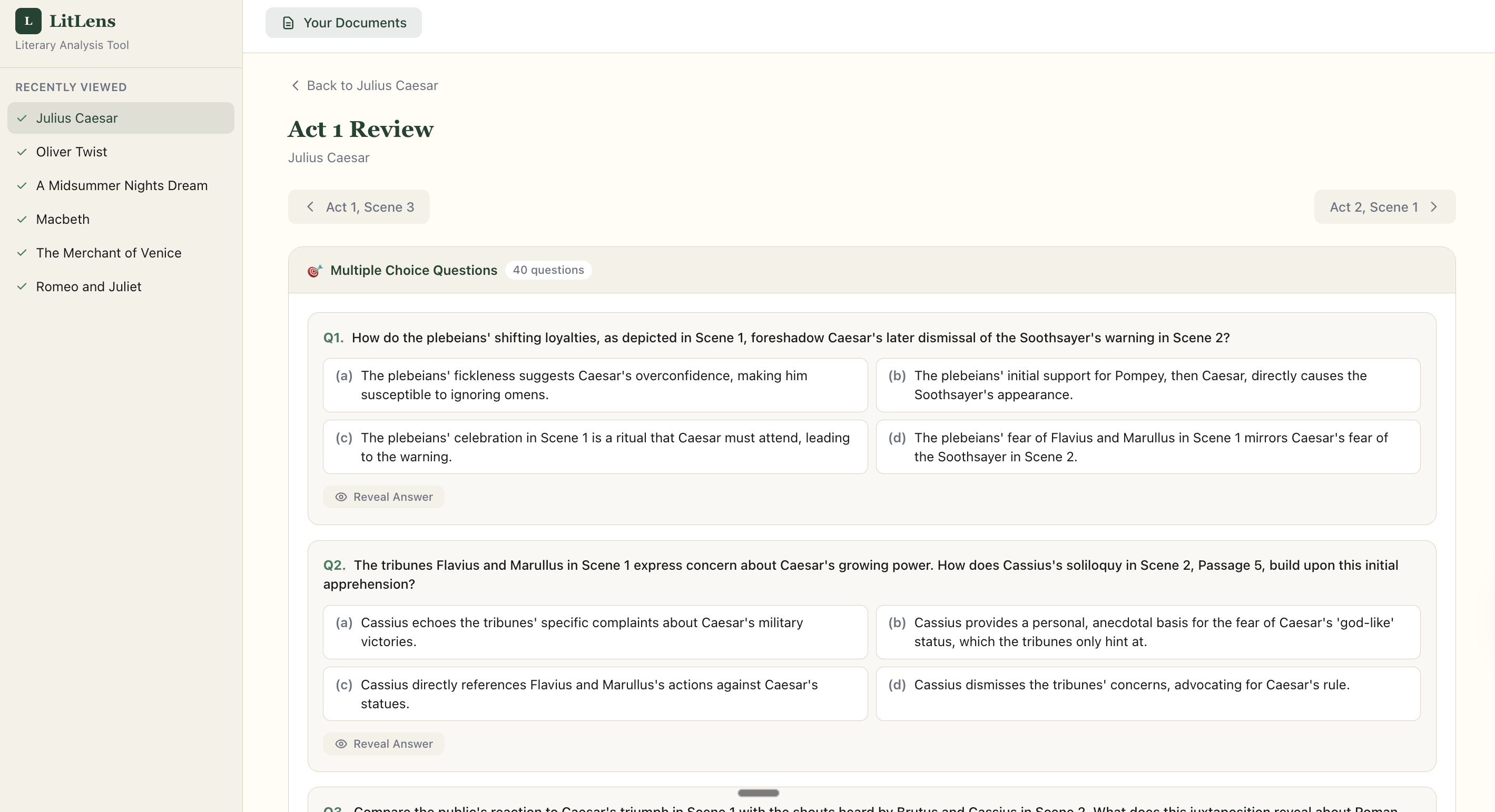
Overview breaks down difficult words, gives context, puts scenes into plain English, and adds modern parallels so the text actually feels relevant. Language covers literary devices, motif tracking, and critical evaluation. Practice has assignments, PEE structure guides, model essay paragraphs, and masterclass worksheets. Questions gives passage-based and extract-based questions - the exact formats students face in actual exams.
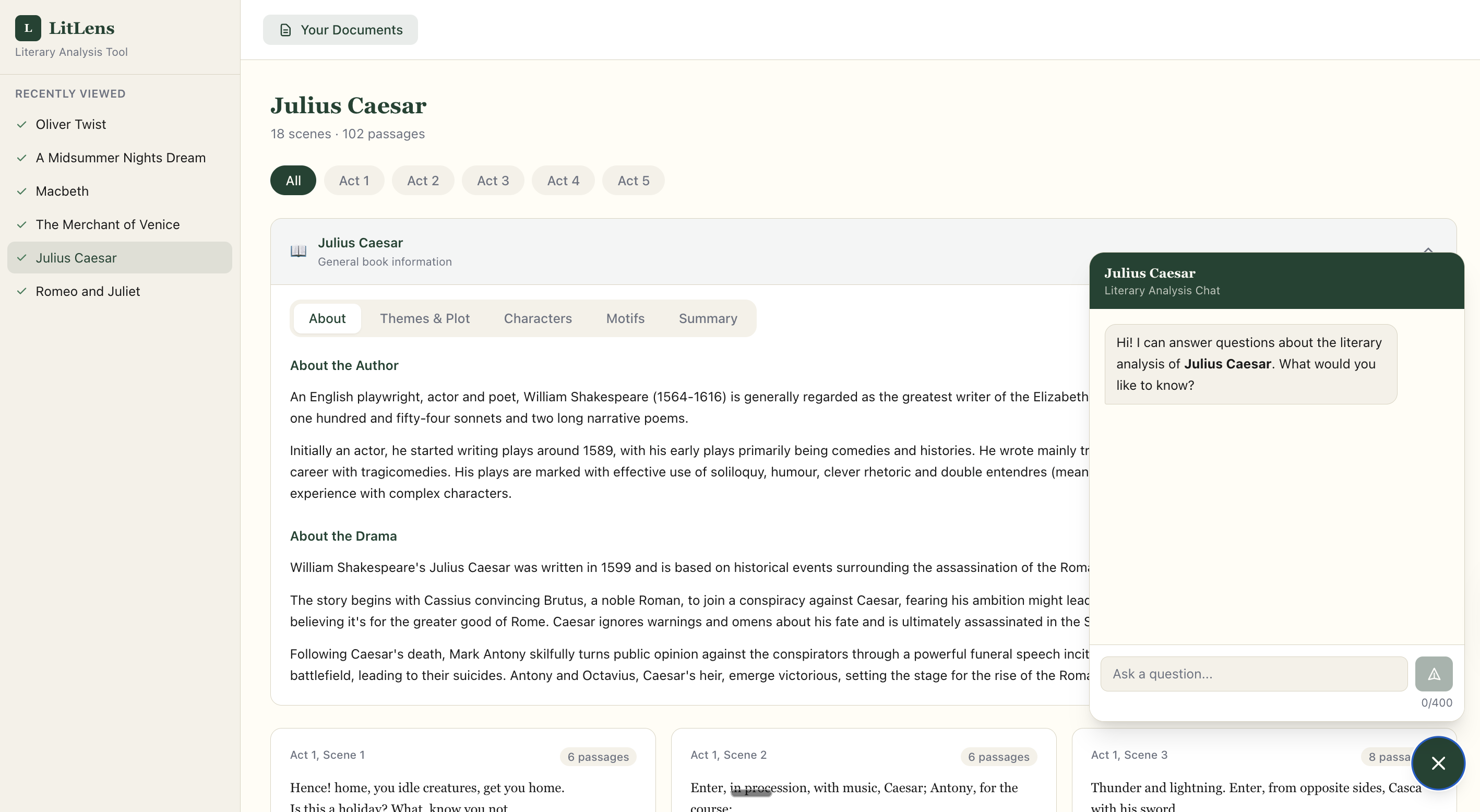
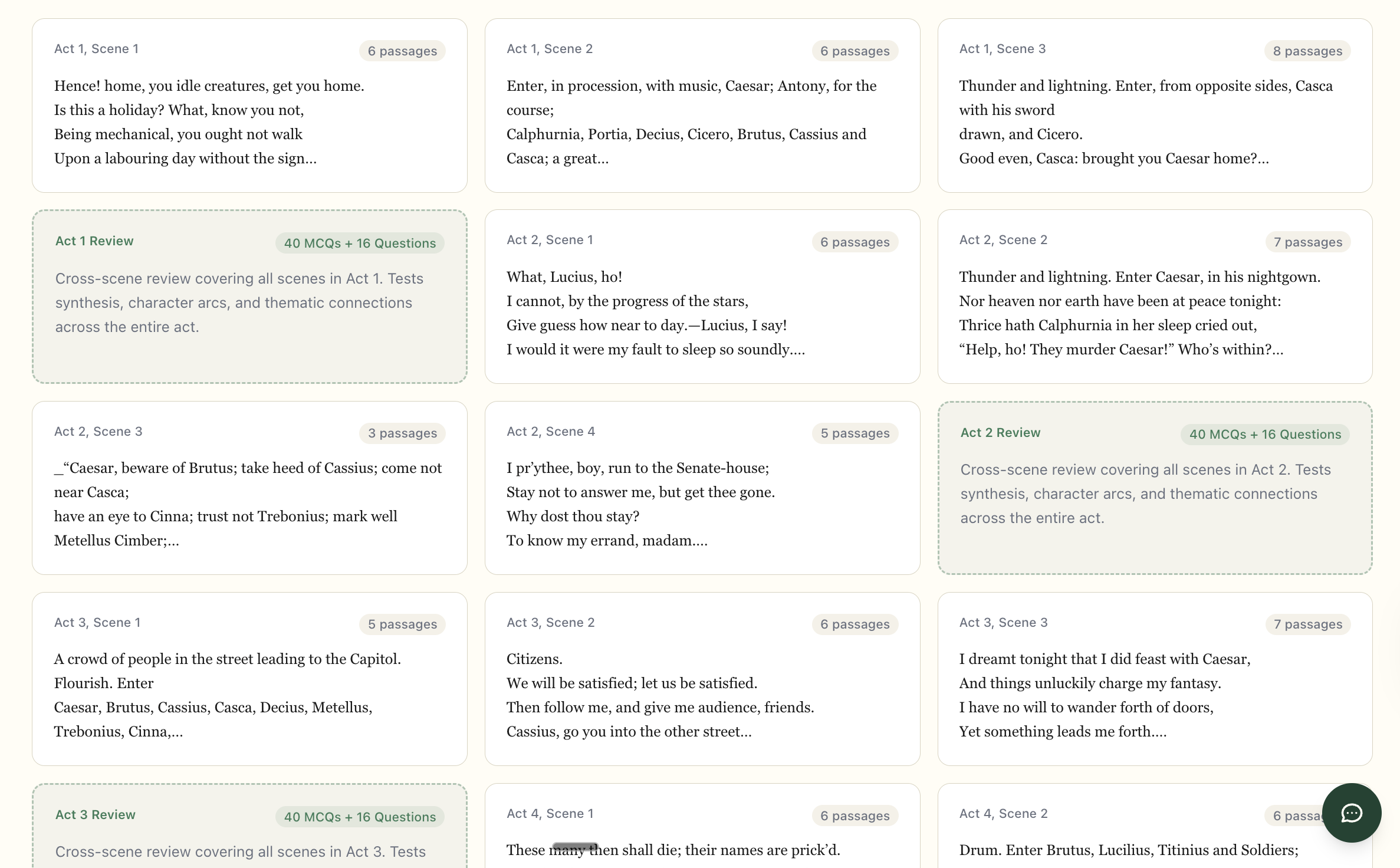
Every book also comes with author background, theme breakdowns, act-by-act or chapter-by-chapter plot summaries, character profiles, relationship webs, recurring motif analysis across the full text, and a book-specific chatbot where students can ask anything - scoped only to that book and the pages they're on. Starting at 500 books and building from there.
Status
In active development. Not publicly available yet.